Vallocycle
  • Home
  • About
  • Articles
  • Contact

Articles

The Helmet Argument

8/1/2022

0 Comments

 
Picture
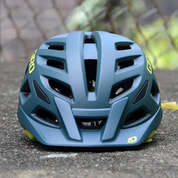
In Alabama, wearing a bicycle helmet is a personal choice. The decision to wear (or not wear) a helmet is divisive and not an open and shut case. Pro-safety arguments for wearing a helmet are well-known, but what about the other perspective?
​
Modern bicycle helmets are made of hard plastic on the outside, a type of foam on the inside, and a way to attach your head. On impact, the plastic helps your helmet to slide and more evenly distribute the impact force, the foam compresses against the plastic, which slows your brain when it compresses against the inside of your skull. Most helmets work well if your head hits something hard. However, there are many other factors to consider:
​
  • Law – Helmet Law for Minors (Ala. Code §§32-5A-283; 32-5A-285): Whether you are the operator or passenger, a helmet is required for anyone under the age of 16 while riding a bicycle in public. Thus, those 16 years of age or older can make their own decision as to whether they want to wear a helmet.
  • Crashes – in 2020, ALDOT reported 220 bicycle crashes (76% caused injuries and 3.6% caused fatalities), 725 pedestrian crashes (79% caused injuries and 13% caused fatalities), and 134,039 vehicle crashes (28% caused injuries and 0.7% caused fatalities) [ALDOT 2020 Crash Facts]. Since all of these crashes involved a motor vehicle, one could argue that everyone on the road (cyclists, pedestrians, and motorists) should wear helmets. Coronado et al. (2011) determined that 17.8% of all motor vehicle crashes resulted in head injury (Traumatic Brain Injury) and Momentum Magazine reported that only 25% of bicycle accident hospitalizations were the result of a head injury. Thus, while a helmet might help you in some cases, there’s little evidence that a) it will save you from most injuries, and b) a cyclist needs a helmet more than a driver or pedestrian.
  • Research – A 2016 literature review (Martin & O’Connell) found that most studies do a poor job estimating helmet injury reduction because it is very difficult to control for cyclist exposure and difficult to control for other confounding factors This. literature estimated head injury reduction with helmet use from as high as 88% to as little as 42%. Research is inconsistent in determining how well a helmet protects your head in a crash.
  • Safety in Numbers – The most important protection for a cyclist’s safety is the presence of other cyclists. A 2017 study (Fyhri et al.) found that the more bikes on the road, the more drivers saw bikes and were able to coexist safely with riders. Unfortunately, helmet laws can reduce the appeal of riding bikes. Requiring riders to wear helmets creates a barrier that may scare a would-be cyclist away, as many people do not like wearing helmets.
  • Risk Compensation – people become more careful when perceiving greater risk and less careful when perceiving lower risk. Safety equipment such as a bike helmet, increases risk compensation – wearing your helmet and darting between cars at high speed is a bike rider form of risk compensation. A 2013 study published in Transportation Research Record (Zaki et al.) found that helmeted bicyclists traveled about 50 percent faster than riders without helmets. It makes sense that the faster/riskier you ride the more likely you are to be involved in crashes and wear a helmet and that slower bicyclists perceive bike riding to be less risky and are not as likely to wear a helmet (2012 Fyhri et al.) That being said, a bike helmet can only offer so much crash protection. Grant Peterson (founder of Rivendell Bicycle Works) may have said it best, “Are you safer wearing a helmet and overestimating its protection, or going helmetless and riding more carefully?”

I wear a helmet on almost every trip I take. However, I do not feel safer wearing a helmet – it does offer great rain and sun protection. I dislike the inconvenience of having an additional thing to secure when I leave my bike. However, I would never judge a cyclist who chooses to go helmet-free, for the reasons I have outlined above.
​
ValloCycle is Alabama’s oldest citywide bike share. We welcome riders of all experience levels. For more information visit vallocycle.org or contact [email protected]

0 Comments


Leave a Reply.

    ValloCycle

    Our articles also appear in the Montevallo Chamber Chatter - find us in print there!

    Categories

    All
    Bicycle Life
    How To
    Maintenance

    RSS Feed

Powered by Create your own unique website with customizable templates.
  • Home
  • About
  • Articles
  • Contact
