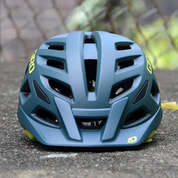
 In Alabama, wearing a bicycle helmet is a personal choice. The decision to wear (or not wear) a helmet is divisive and not an open and shut case. Pro-safety arguments for wearing a helmet are well-known, but what about the other perspective?
Modern bicycle helmets are made of hard plastic on the outside, a type of foam on the inside, and a way to attach your head. On impact, the plastic helps your helmet to slide and more evenly distribute the impact force, the foam compresses against the plastic, which slows your brain when it compresses against the inside of your skull. Most helmets work well if your head hits something hard. However, there are many other factors to consider:
I wear a helmet on almost every trip I take. However, I do not feel safer wearing a helmet – it does offer great rain and sun protection. I dislike the inconvenience of having an additional thing to secure when I leave my bike. However, I would never judge a cyclist who chooses to go helmet-free, for the reasons I have outlined above. ValloCycle is Alabama’s oldest citywide bike share. We welcome riders of all experience levels. For more information visit vallocycle.org or contact [email protected]
0 Comments
This year marks the 10-year anniversary of ValloCycle. In February 2011, representatives from the Montevallo City Council, UM Office of Community Engagement and Service Learning, Environmental Studies, Kinesiology Department, and the student body came together and developed the idea of a city-wide bike share program. This bike share partnership between the City and the University was the first of its kind in Alabama.
In 2012, the ValloCycle city board was formed to guide the organization and implement its mission. The board decides on how to spend funds, which events to organize/participate in, and how we can best serve the local cycling community. Our board is an energized and fun group that represents university and community members – contact us if you’re interested in joining us or sitting in on a meeting! Although we were created as a bike share and continue to offer bikes for rent at $20 per term (vallocycle.org), our biggest goal is to foster a vibrant biking community in Montevallo. Here is a brief list of what we do to promote biking in our community: Community Events – we sponsor booths at most of our public community events to spread the word about ValloCycle. Group Rides – our popular monthly Glow Ride is a no-rider-left-behind evening roll through the neighborhoods of Montevallo. We also lead weekend rides to some of Montevallo’s lesser visited places, an orientation ride every fall, and community cleanup twice a year. Maintenance Clinics – we offer spring and fall pop-up maintenance events to share the knowledge needed to maintain and repair your bike. Share the Road signs – these signs remind motorists and bicyclists that the road is to be shared, demonstrating the community’s support for cyclists in town. Bike Racks – CommuteSmart has installed bike racks throughout the city, and UM’s art department has designed and installed several sculptural racks on campus that are beautiful and practical. Bicycle Maintenance Stations – thanks to two UM Green Fund grant, you can pump up your tires and use basic bicycle maintenance tools at our maintenance stations in front of UMOM on Main Street and adjacent to Anna Irvin Dining Hall on the UM campus. UM and Montevallo has been incredibly open to embracing issues of sustainability. We welcome riders of all experience levels. ValloCycle is Alabama’s oldest citywide bike share. The Guardian reported that bicycle usage has increased dramatically in the United States during the COVID-19 pandemic. Riding bicycles has built-in social distancing, lets you see the world at a slower pace so you don’t miss the small things, helps prevent depression, decreases stress, helps with memory and reasoning, and helps improves brain health. Consumer Reports recommends the following steps for safe pandemic cycling:
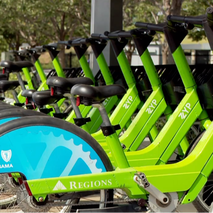 ValloCycle is Alabama’s oldest city-wide bike share. Most bike sharing programs are located in large cities or universities around the country. In fact many programs can be found around our state. Birmingham, Huntsville, Mobile, Montgomery, Troy, Auburn, Montevallo, and three cities in Calhoun County all maintain public bicycle share programs. Most of the state’s programs are centered on the short-term checking out of bikes. The goals vary but most large-scale urban bike sharing programs utilize numerous bike check out stations and operate much like a public transit system. 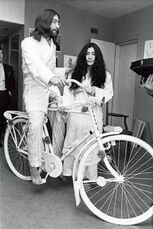 Bike sharing first appeared in the 1960’s. In fact John Lennon and Yoko Ono appeared in a photo with one of the first bikes from one of these programs. Provo responded to the perceived threats of air pollution and capitalism by creating the world’s first bike share. Their goal was for motorists to leave their cars in parking lots and continue traveling on bike. Bike share systems never gained much traction until the 2000’s. Even during the US bike boom from 1965-1975, when more bicycles were sold than cars, the concept never took hold.
ValloCycle is the Montevallo bike share, but we operate more like a bicycle library system than a bike share system. Long-term checkout is available on a variety of bicycles for $20 per term. ValloCycle is dedicated to offering bicycles to community and University members to develop a bicycling community in Montevallo. We advocate for cycling infrastructure, provide bicycle maintenance clinics, and provide free bicycle rental for each of our group rides. Sharing a bike is a great way to regain the confidence of riding and experiment with different bicycles. Riding will leave you feeling more energized than walking or riding in a vehicle. The freedom you experience riding is better than flying and is good for the environment. Biking is the most efficient form of transportation every devised by humans. Learning about bicycles is half the fun of riding. These fun facts may help tip the scales in favor of finally getting back in the saddle!
Check out February 2017 Chatter Archives for our original ‘Cycling Fun Facts’ article. Bicycling is a great activity for kids – it can improve coordination/physical fitness and foster independence – but teaching kids how to bike takes some time and effort. Helping your children get off on the right foot is worth the energy. Our goal is to focus on making cycling a fun activity. However, making cycling fun isn’t just something for the young – people of every age can have a joyful bike experience by following these tips:
Before the Ride
This year marks the 7-year anniversary of ValloCycle. In February 2011, representatives from the Montevallo City Council, UM Office of Community Engagement and Service Learning, Environmental Studies, Kinesiology Department, and the student body came together and developed the idea of a city-wide bike share program. This bike share partnership between the City and the University was the first of its kind in Alabama.
In 2012, the ValloCycle city board was formed to guide the organization and implement its mission. The board decides on how to spend funds, which events to organize/participate in, and how we can best serve the local cycling community. Our board is an energized and fun group that represents university and community members – contact us if you’re interested in joining us or sitting in on a meeting! Although we were created as a bike share and continue to offer bikes for rent at $20 per term (vallocycle.org), our biggest goal is to foster a vibrant biking community in Montevallo. Here is a brief list of what we do to promote biking in our community: Community Events – we sponsor booths at most of our public community events to spread the word about ValloCycle. Group Rides – our popular monthly Glow Ride is a no-rider-left-behind evening roll through the neighborhoods of Montevallo. We also lead weekend rides to some of Montevallo’s lesser visited places, an orientation ride every fall, and community cleanup twice a year. Maintenance Clinics – we offer spring and fall pop-up maintenance events to share the knowledge needed to maintain and repair your bike. Share the Road signs – these signs remind motorists and bicyclists that the road is to be shared, demonstrating the community’s support for cyclists in town. Bike Racks – CommuteSmart has installed bike racks throughout the city, and UM’s art department has designed and installed several sculptural racks on campus that are beautiful and practical. Bicycle Maintenance Station – thanks to a UM Green Fund grant, you can pump up your tires and use basic bicycle maintenance tools at our maintenance station in front of UMOM on Main Street. UM and Montevallo has been incredibly open to embracing issues of sustainability. We welcome riders of all experience levels. ValloCycle is Alabama’s oldest citywide bike share. For more information visit vallocycle.org or contact [email protected] Most people think of cycling and images of beautiful fall and spring days come to mind. Fall is a not-so-distant memory, and spring will be here in just over two months. What would happen if we continued to ride all winter?
Stronger & Tougher – training in the off-season nearly doubles the opportunity to build muscle and endurance. Keep in mind that winter training is very different from the rest of the year, so prepare appropriately. Winter riding is hard on equipment, your body, and your psyche. After a season of cold your will have seen more than most and dealt with frozen/numb extremities. You will discover a new respect for the stages of defrosting and be better for it. You’ll Slay Calories – biking keeps your lower body very active and your upper body relatively calm. Nonshivering Thermogenesis (NST) is about keeping your body just warm enough to not shiver. NST increases calories burned while riding and may do the same while you rest. This is another way of saying that being cold helps you burn more fat. Reduced Sickness – regular exercising reduces your chance of getting sick by half. Staying out of germ-infested indoor environments can’t hurt either, and you can save money by canceling that gym membership. Creativity – winter weather forces us to ride differently. Instead of long back-road routes, you may find yourself riding circuits or intervals in a local park or enjoying a now abandoned bike path in the depth of winter. The benefit of changing your regular routes will help you avoid finding yourself frozen and numb eight miles from home. Layering – other outdoor winter activities can have you warming your entire body quickly and either shedding layers or under dressing. The challenge with cycling is balancing the art of thin layers with the science of maintaining a high enough core temperature to avoid shivering. With some practice, you will become a master of this skill. Gear – winter weather really does a number on your bicycle and equipment. As your bike expands and contracts with the temperature swings your brakes, cables, drivetrain, and tires really take a beating. Winter bike care is essential. Ride with us this winter! ValloCycle is committed to creating and supporting a biking community in Montevallo. Cycling has all sorts of benefits outside of increasing your physical strength and looking really cool. Here are some other major benefits that you may not have known.
Emotional Benefits – According to Bicycling Magazine, a recent study analyzing 26 years of research found that as little as 20-30 minutes of exercise per day can help prevent depression. A good ride can have emotional benefits including feeling better, relieve anxiety, and increase stress resistance. Decreasing Stress - A 2013 study by Ida and colleagues published in BioPsychoSocial Medicine found that after 15 minutes of pedaling a stationary bike participants levels of cortisol, a stress hormone, declined significantly. Memory and Reasoning – The Journal of Clinical and Diagnostic Research published a study in 2013 by Nanda and colleagues which found that participants scored higher on memory, reasoning, and planning tests after 30 minutes of moderately intense spinning on a stationary bike than before they rode. Aging Benefits – Chapman and associates published an article in Frontiers in Aging Neuroscience in 2013 that took participants ages 57-75 through a physical training program that included using an exercise bike three times per week. They found that benefits begin to show before the 6-month mark in maintaining adequate blood flow to the brain. They conclude starting aerobic exercise sooner is better since the slope of decline in brain health become steeper from age 50 onward. Get Outside – In a 2014 study published in Frontiers in Psychology, Pearson and Craig found that spending time in nature can reduce stress and decrease symptoms of depression and anxiety. Cycling in the great outdoors and in natural surroundings will increase these benefits. In fact, there is also evidence that exercising outside will increase enjoyment of and motivation to maintain an exercise program. Prescription for Happiness – Bicycling Magazine recommends the following based on a recent review study on exercise and depression: 3 - 5 (45 - 60 minute) sessions per week, keeping your target heart rate between 50 - 85% of your maximum. You don’t have to take these researchers’ words for it. Grab a bike and go for a ride to discover your own benefits to riding! November 5th at 2am marks the end of daylight savings time for 2017. As our clocks fall back, we will see the sun rise and set earlier, meaning that bicycle lighting will become all the more important on our evening glow rides. Bicycle lighting can be broken down into two basic categories: lights that help others see you, and lights that help you see others.
Alabama Code 32-5A-265 requires that when biking at nighttime you have a white light mounted on the front that can be seen at least 500 feet away. This same code requires a red reflector in the rear that can be seen from 500 feet away when low beams from a motor vehicle are being used. This can be established by clipping on an inexpensive LED bike light. However, these codes only establish the bare minimum of visibility – we recommend the following lights:
|
ValloCycleOur articles also appear in the Montevallo Chamber Chatter - find us in print there! Categories |
 RSS Feed
